Price Upon Request
This piece is offered privately. Contact us for pricing, provenance, and to arrange a viewing.
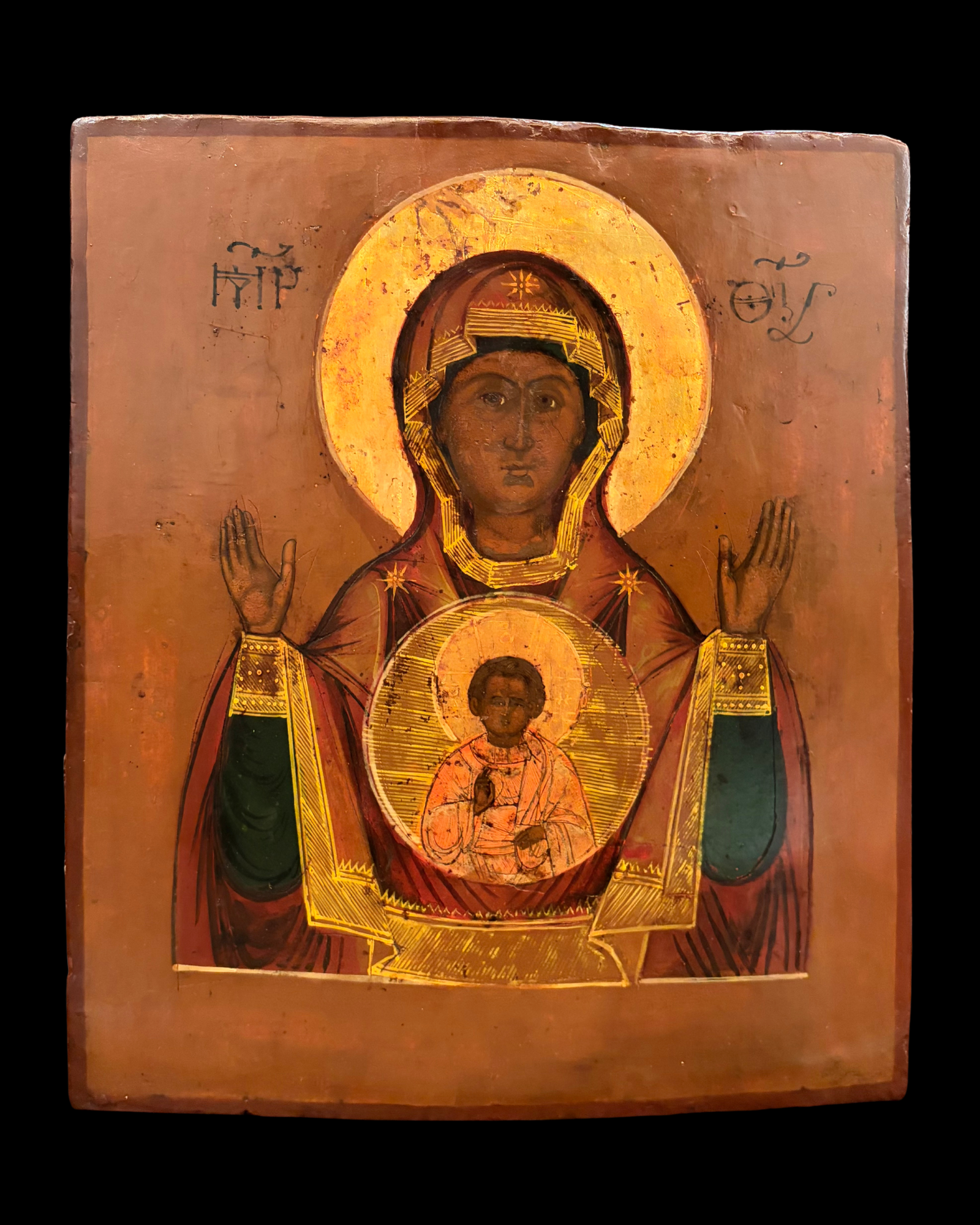
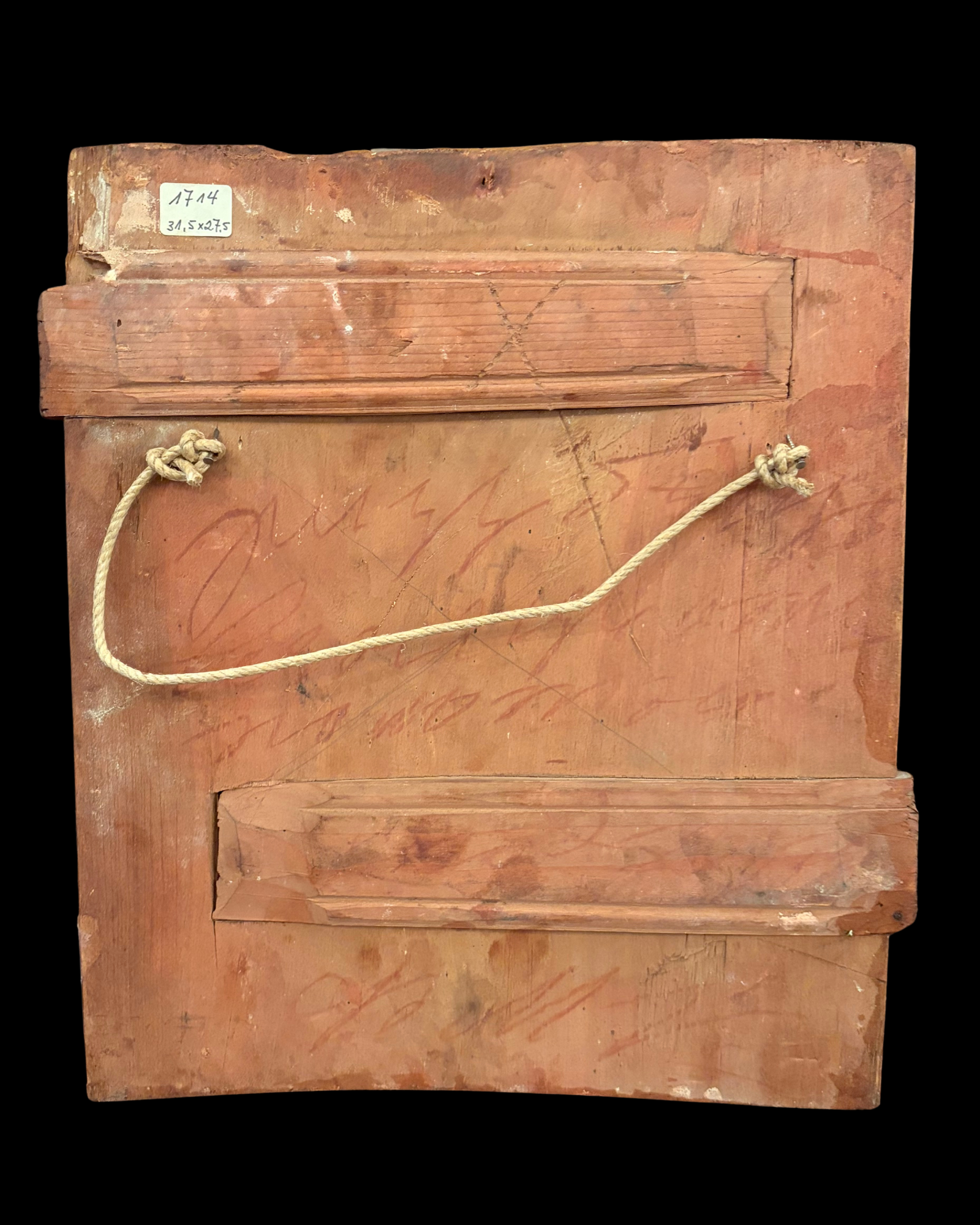
A beautiful 19th-century Russian icon depicting the Mother of God of the Sign, also known as Znamenie, one of the most revered representations of the Virgin Mary in Russian religious art. The Mother of God is portrayed in the traditional Orans position, with both hands raised in prayer and intercession, while the Christ Child Emmanuel appears within a circular medallion upon her chest, offering a gesture of blessing. Her solemn expression, richly decorated garments, and radiant golden halo create a powerful devotional image symbolizing divine protection, intercession, and the mystery of the Incarnation. Hand-painted in tempera on levkas on a traditional wooden panel, the icon is distinguished by its luminous gilded halo, finely executed facial features, and elaborate gold ornamentation throughout the Virgin’s garments. The deep red maphorion, decorated with symbolic stars and delicate golden highlights, contrasts beautifully with the dark green sleeves and warm reddish-brown background. The carefully rendered Christ Emmanuel, surrounded by a richly gilded circular medallion, further enhances the composition, reflecting the refined decorative traditions of 19th-century Russian icon painting. Dating to the second half of the 19th century, the icon retains its authentic historical character, displaying a naturally aged surface and distinctive period patina. The substantial wooden panel features two traditional transverse reinforcing battens on the reverse, with visible evidence of age, wear, and structural movement. The surviving gilding, traditional painted details, subtle craquelure, and natural surface discoloration contribute to its historical character and enduring devotional significance. Condition: Overall good antique condition considering its age, with age-related surface wear, fine craquelure, scattered abrasions, and minor paint and ground losses, particularly along the edges and portions of the gilded surfaces. The wooden panel displays natural irregularities, localized wear, and signs of historical structural movement, while the reverse retains its traditional reinforcing battens. Evidence of historical conservation or localized retouching may be present. Despite these age-related characteristics, the principal composition remains beautifully preserved, with the Virgin’s expressive facial features, richly decorated garments, and luminous gilded halos maintaining their strong visual appeal.